It depends on the city. In Dallas, the city maintains the wastewater connection from the main to the property line, and the building lateral is private plumbing. In Austin, the private lateral ordinance the city links requires the property owner to repair a defective private lateral after the city sends a notice. For Houston, we found no official page that gives the dividing point, so ask Houston Public Works for your address.
Below is how Dallas and Austin put it in their own words, what to ask in Houston, and what to do when your line fails.
Sources checked: October 20, 2026 (Dallas City Code, July 2026 edition; the Austin ordinance Austin Water links, passed in 2013). City codes change: confirm the current rule with your city. Food business rule: Texas Administrative Code, Title 25, § 228.1, which adopts the FDA Food Code 2017 (§ 8-404.11 and § 8-404.12), and § 228.2 for who the regulatory authority is.
The two parts of a sewer line
Every building’s sewer line has two parts:
- The private line (often called the building lateral or private lateral): the pipe from your building to the point where it meets the city’s system.
- The city’s part: the public main, and in some cities the connection from the main to your property line.
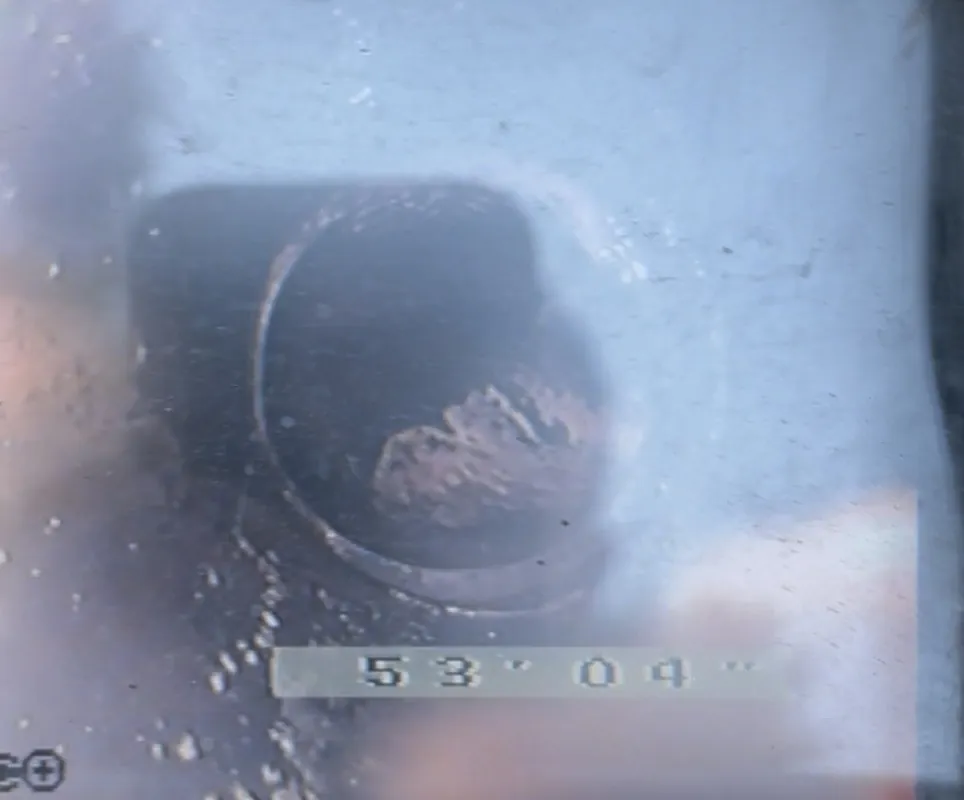
When something goes wrong, the first question is which part failed. A camera inspection of the line answers that.
Dallas: the city stops at the property line
The Dallas City Code (§ 49-24) makes the city responsible for the sewer service connection “from the main to the property line in the case of wastewater service.” Everything from the property line to your building is the building lateral, which is private plumbing.
So in Dallas, the city’s maintenance stops at the property line.
Austin: the owner repairs a defective private lateral
Austin calls the pipe from the building to the city’s system the private lateral: “the wastewater line connecting a building to the City’s wastewater system.” Austin Water investigates private laterals “when there is a wastewater overflow or blockage on private property” and works to have defective ones repaired.
The private lateral ordinance that Austin Water links from its program page (the 2013 ordinance amending City Code Chapter 15-11) sets out what happens next. If the city finds a defect, it sends the property owner a written notice that “the private lateral must be replaced or repaired, or the condition corrected, not later than the 120th day after the date of the notice.” The ordinance also says: “A property owner commits an offense if the owner fails to repair or replace a defective private lateral” by the date in the notice. If the owner does not act, “the City may repair or replace the private lateral or correct the condition” and charge the owner for the work.
Austin private lateral ordinance, City Code Chapter 15-11 (PDF)
Austin Water Private Lateral Program
Houston: ask the city where your line ends
We did not find an official Houston page that states the dividing point in plain words, so we won’t guess it here. Before you pay for a repair or wait for a city crew, call Houston Public Works and ask where the city’s sewer responsibility ends for your address.
One Houston fact that matters for restaurants: Houston Public Works says 70% of sewer overflows in Houston are caused by clogs from fats, oils and grease poured down the drain and wipes flushed down toilets.
Houston Public Works, Wastewater Operations
Signs the problem is in your line
- Several drains in the building slow down or back up at the same time
- A drain backs up again soon after it was cleared
- A sewer smell inside the building or near a cleanout
- Wet ground, sinking pavement or new cracks above where the line runs
If only one fixture is slow, the problem is usually inside the building. If everything backs up together, look at the line outside.
What to do when the line fails
1. Stop adding water and protect the building
Limit water use until you know where the problem is. If sewage is coming up inside, keep people away from it. In a restaurant or other food business, the Texas food establishment rules adopt the FDA Food Code, which says to “immediately discontinue operations and notify the regulatory authority” if an imminent health hazard may exist because of an emergency such as a sewage backup. Texas defines that authority as the body “having jurisdiction over the food establishment”: the state, or your city, county or public health district. You need its approval before you reopen.
2. Find out which side failed
Knowing where the problem is comes first, because it decides who should repair it. A camera inspection of the line helps find it; Austin’s ordinance lists “closed circuit television inspection” among the tests the city itself may use.
3. If it is your line, ask whether it can be repaired without digging
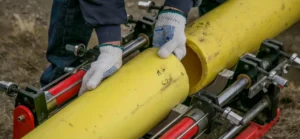
Ask whether the pipe can be repaired with less digging, so floors, parking lots and landscaping can stay in place. Not every pipe qualifies.
Questions
Does the city pay for a sewer line repair on my property?
Not under the two codes quoted here. In Dallas, the city’s maintenance stops at the property line. In Austin, the ordinance puts the repair of a defective private lateral on the owner, and if the city does the work itself it may charge the owner. Check your city’s rule for your address.
Who do I call about a sewer backup?
If the problem looks like it is in the city’s part, report it to the city. Houston Public Works, for example, runs a program for customer-reported issues such as “sewer backups, blockages, sinkholes, and odor complaints.” If it is in your own line, call a company that repairs commercial sewer lines.
Is a grease trap part of the sewer line?
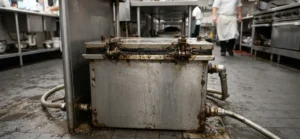
The grease trap sits on the building’s own plumbing, so it is the owner’s to keep working. If the line after it is the problem, the steps above apply to that line.
Is this legal advice?
No. City rules change and some properties have special agreements. Confirm with your city for your address.
Talk to us about your line
Pipe InterTech works on commercial buildings in the Houston, Dallas and Austin areas. Its services include grease trap repair, trenchless pipe repair and sewer camera inspection. Call (833) 454-6464.