November 2026
Grease in a commercial sewer line after the grease trap means something let it through. The trap-side causes to rule out: a baffle wall that has broken or corroded through, an outlet or inlet tee that is missing or broken, and a sink or drain that is plumbed around the trap. Jetting the line removes the grease, but the cause stays where it is. A camera inspection of the line, together with a look at the trap once your pumping company has emptied it, tells you which cause you have.
What causes grease in a sewer line after the grease trap?
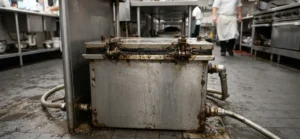
A grease trap works because grease floats. Water enters at one end, the grease rises and stays behind a wall, and the water goes on to the outlet at the other end. City of Bellevue, Washington’s technical sheet on how its system works says the baffles hold grease toward the upstream end because grease “will generally not go under the baffle”. Each cause below breaks one part of that.
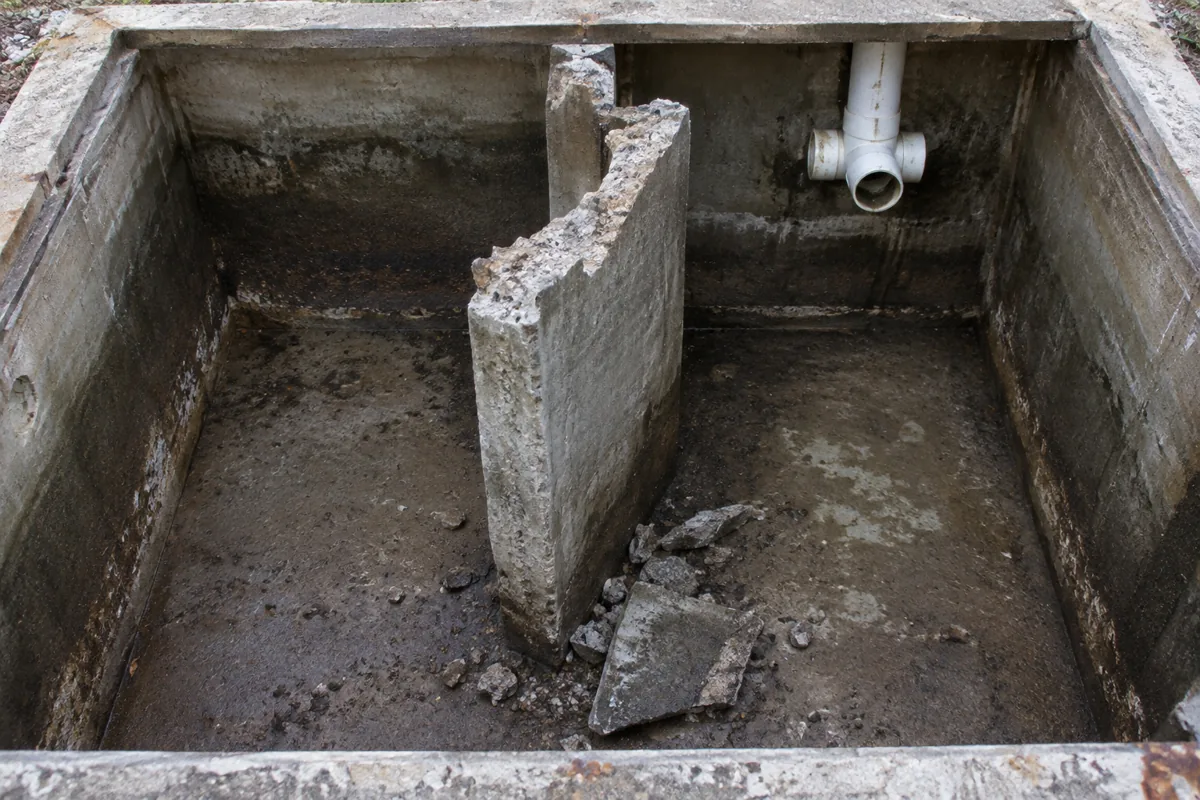
A broken or holed baffle wall
The baffle wall is the inside wall that keeps floating grease away from the outlet. When a section breaks off or corrodes through, grease that should wait behind it reaches the outlet side and leaves with the water.
How does a wall corrode? EPA’s training slides for sewer inspectors (guidance, not a rule) link hydrogen sulfide gas inside grease control equipment to corrosion and odors, and note that grease itself carries weak acids. In concrete sewers, EPA describes bacteria turning that gas into sulfuric acid on damp surfaces above the water, and the acid softening the concrete; we expect the same in a concrete trap, though EPA does not write about traps by name. Steel is attacked by the gas directly, so a steel trap is not safe from it either. Some baffle walls are built with an opening on purpose, as the diagram in EPA’s slides shows, so whether a hole is damage is for the person who sees the emptied trap to judge.
For how these walls are built and why they break, see this guide from our Austin team.
Grease trap baffle walls explained
A missing or broken outlet tee
The outlet tee is the T-shaped pipe fitting on the way out of the trap.
In EPA’s slides the outlet tee is critical, and EPA names Schedule 40 PVC as the minimum (a common heavy-wall plastic pipe). The slides mark other tee materials, and tees fixed directly to the wall, as no good.
A missing inlet tee
On a hydromechanical trap (a factory-built unit), the inlet sends incoming water down instead of letting it splash across the surface, Bellevue’s sheet explains, so it does not stir up grease that has already floated to the top. EPA’s slides list what happens without one: the water does not stay in the trap long enough, kitchen wastewater rushes straight through, backups in the building become more likely, and the floating grease layer itself can block the inlet.
Is the trap being pumped on schedule?
Rule this out too. The International Plumbing Code (2021 edition, a model code that cities adopt with their own changes) requires interceptors to be maintained by periodic removal of the grease and other floating material that builds up. If pumping is overdue, that is a job for your pumping company, not a repair. Pipe InterTech does not pump traps or haul grease.
A sink or drain that skips the trap
The Uniform Plumbing Code, as Bellevue cites it, requires all flow to enter the interceptor through its inlet. A fixture tied straight into the sewer line sends its grease past the trap entirely. EPA’s slides give a case: an interceptor pumped every two months, with the right inlet tee, outlet tee and baffle wall, still had heavy grease in the sewer downstream. EPA’s next step was a dye test of the kitchen fixtures, to trace where each drain really goes.
That case cuts both ways. Grease in the line does not always mean the trap is broken, and repairing a broken trap may not end the grease if a drain also skips it.
What does grease buildup do to a main sewer line?
EPA’s fact sheet for food service businesses, citing its 2004 report to Congress, names grease as the most common cause (47%) of reported sewer blockages nationally. EPA explains why: grease hardens, narrows the space the pipe has for flow, and then blocks it.
In a restaurant, that can show up as slow drains or a floor drain backing up. Our guide to the signs of a failing commercial sewer line covers those symptoms and what to do first when sewage comes up inside a food business.
Signs a commercial sewer line is failing
Why does grease come back after the sewer line is jetted?
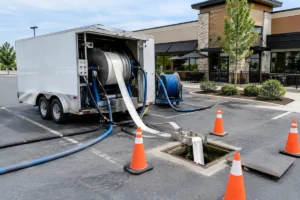
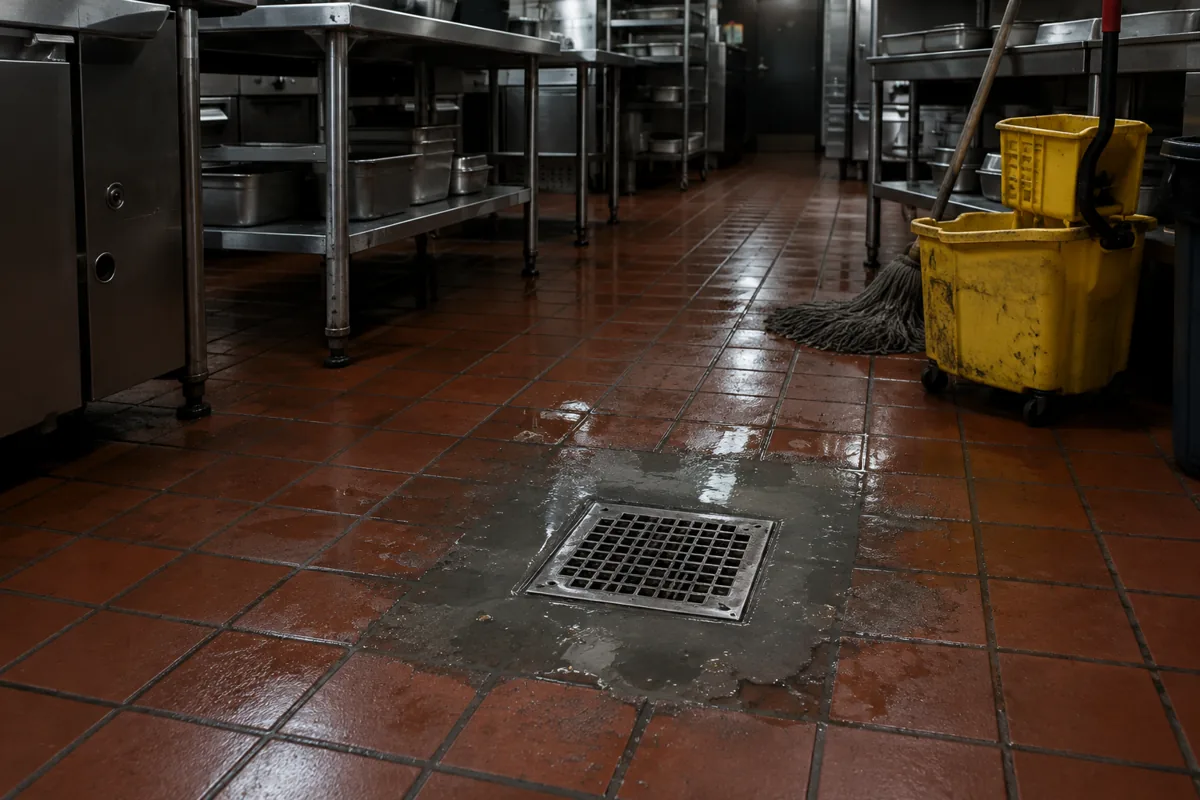
Jetting means cleaning the inside of the line with a high-pressure water hose. It is the right treatment for grease deposits: PACP, the coding system that NASSCO, the sewer industry association, publishes for camera video, files deposits as a maintenance problem, and maintenance problems call for cleaning.
What jetting cannot do is reach the cause upstream. A broken baffle wall or a missing outlet tee keeps sending grease into the line every day the kitchen runs, so the deposits build up again. If the line needs jetting more and more often, stop treating the line alone and look at what feeds it.
No product poured down a drain rebuilds a baffle wall or replaces a tee.
How do you find which cause you have?
Two checks, one on each side of the trap.
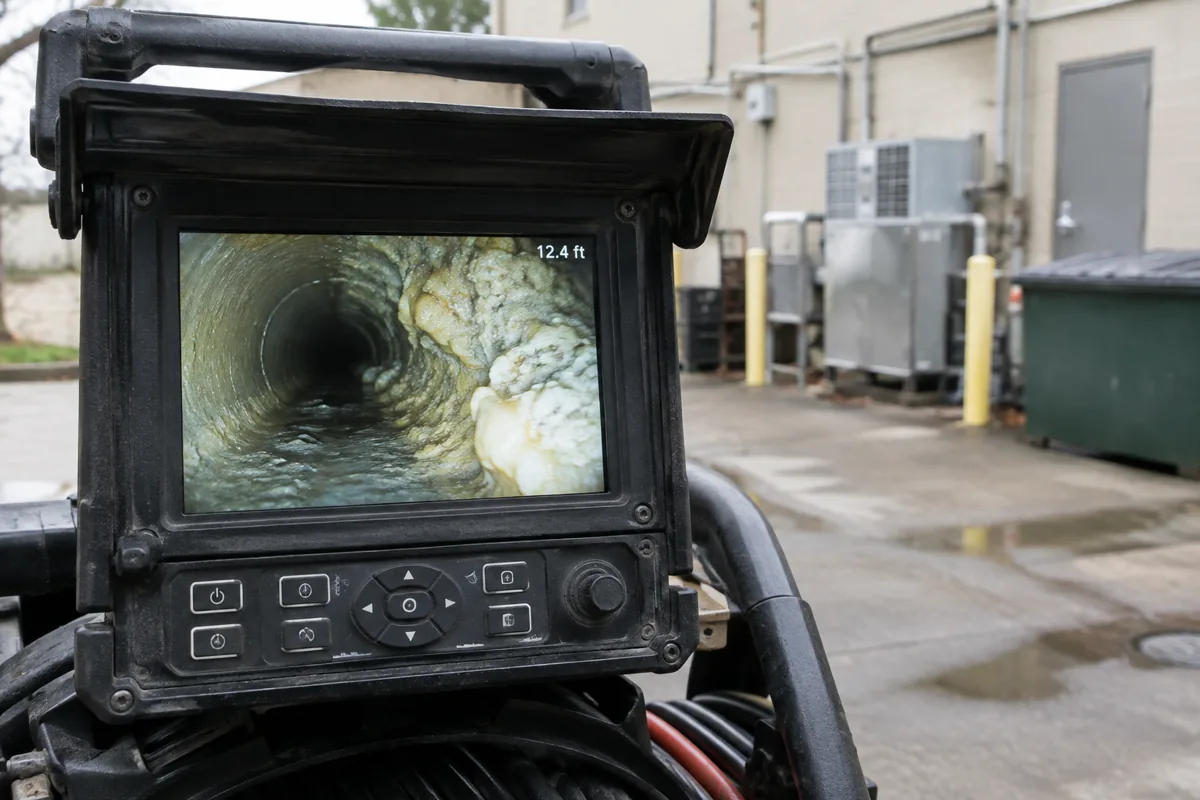
A camera inspection of the line
A camera run through the line records where the grease sits and how much there is. Because PACP grades structural damage separately from deposits, the same video also shows whether the pipe under the grease is cracked or broken. Ask for the line to be cleaned enough for the camera to see the pipe wall, and keep the video.
A look at the emptied trap
With grease and water in it, you cannot see a trap’s baffle wall or tees. Once your pumping company has emptied it, the walls, the baffle, the tees and the inlet and outlet pipes are all in view. PDI-G101, the industry standard for factory-built grease interceptors, says that after each cleaning the interceptor should be checked to make sure the inlet, outlet and air relief openings are clear.
Do not open, lean into or reach into the trap or a manhole yourself. EPA’s slides treat these openings as confined spaces that can hold hydrogen sulfide and methane. Leave the lid to your pumping company and to the crew that inspects or repairs the trap.
What is the fix on each side?
In the trap
- Broken baffle wall, broken or missing tee, damaged inlet or outlet pipe: this is repair work. Pipe InterTech repairs cast concrete, steel and fiberglass traps of all sizes, underground or above ground, including baffle walls, inlet and outlet pipes, T-pipes, deflectors, the floor and the walls.
- Pumping overdue: call your pumping company. It is not a repair job.
- A fixture that skips the trap: a plumber reconnects that drain so its water runs through the trap.
Our repair method is called coating: the trap is cleaned and degreased, holes and cracks are repaired, broken walls are rebuilt, and the entire trap is coated. The work is done overnight after you close. Every grease trap repair carries a 10-year warranty on labor and materials, as long as the trap gets regular pump-outs.
In the line
- Grease deposits only: have the line cleaned, then fix the trap so they stop coming back.
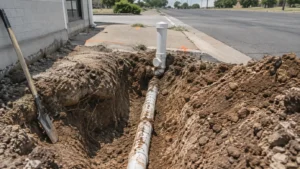
- Cracks or broken sections under the grease: our trenchless repair lines the pipe with cured-in-place pipe (CIPP), a resin-soaked tube that hardens into a new pipe inside the old one, on 3 to 8 inch pipes. Lining suits damaged pipe that still runs at the right slope.
- A sag, where waste sits in a low stretch: lining will not fix it. The signs guide above explains why.
If the line is lined, tell whoever cleans it next, so they choose tools that will not damage the liner.
Questions
Can an undersized grease trap send grease into the sewer line?
Yes. EPA’s slides say an undersized trap lets wastewater rush straight through and carry grease into the sewer. It also says oversizing is a problem of its own, allowing hydrogen sulfide, corrosion and odors.
If the trap was just pumped, is it working?
Not necessarily. Pumping removes what is inside; it does not mend a broken baffle wall or put back a missing tee. The time to check them is right after the trap is emptied.
Do you pump grease traps?
No. The restaurant’s own pumping company empties the trap and takes the waste. We repair the trap and the line.
Who pays to repair the sewer line under the building?
It depends on where the damage sits and on the city. Our guide quotes the Dallas and Austin rules and says what to ask Houston.
Who is responsible for sewer line repair in Texas
Do you work on homes?
No. Pipe InterTech works on commercial properties only.
Sources
EPA, NPDES Operator Webinar: Fats, Oils and Grease (October 2023 slide deck)
City of Bellevue, Washington, Fats, Oils and Grease: How the System Works (undated sheet)
NASSCO Tech Tips, July 2023 (PACP structural and maintenance grades)
EPA, Report to Congress on Combined Sewer Overflows and Sanitary Sewer Overflows, EPA-833-R-04-001 (August 2004), as cited in the EPA fact sheet above
Talk to us about the grease in your line
If grease keeps building up in the sewer line after your grease trap, call (833) 454-6464. We are open 24/7. Tell us what you are seeing, and we will tell you which of our services fits: grease trap repair, sewer camera inspection or lining the line.